
OurCounty 2026: Measuring Progress, Meeting Challenges
Los Angeles County's OurCounty Sustainability Plan sets out a vision for a healthier, more resilient, and more equitable future. But turning that vision into reality requires sustained action, coordination, and accountability.
The 2026 OurCounty Annual Report tracks progress across 72 priority actions, highlighting accomplishments, ongoing challenges, and opportunities for the coming year. Here we take a deeper dive into the findings and what they mean for residents.
For residents who may not be familiar with it, what is the OurCounty Sustainability Plan, and what is it ultimately trying to achieve?
Originally adopted by the Board of Supervisors in August 2019 and updated in November 2025, the OurCounty Sustainability Plan sets out a bold, inclusive vision for the future of Los Angeles County. Its 12 goals and 179 actions address everything from climate change and clean energy to housing, transportation, public health, and access to parks.
Ultimately, the goal is to make L.A. County a healthier, more resilient, and more equitable place to live, with particular attention to communities that have historically faced the greatest environmental challenges.
Each year, the Chief Sustainability Office (CSO) prepares an annual progress report for the Board of Supervisors. These reports are an important accountability tool, allowing the County and the public to assess progress, identify challenges, and adjust priorities as needed.
Why is it important to address issues such as climate change, housing, transportation, and public health as part of a comprehensive sustainability strategy rather than separately?
These challenges are closely connected. Treating them as separate issues can create blind spots and lead to solutions that address one problem while making another worse.
For example, building affordable housing far from jobs and public transit might help ease housing costs, but it can also mean longer commutes, more traffic, and increased greenhouse gas emissions. A comprehensive approach helps us identify solutions that deliver benefits on several fronts at once.
It's also essential to advancing equity. Historically, low-income communities and communities of color have faced higher levels of pollution and less access to parks and green space. Even well-intentioned improvements can have unintended consequences, such as rising housing costs that displace longtime residents.
By considering these issues together, we can work toward communities where clean air, affordable housing, reliable transportation, and access to nature reinforce one another.
How does the plan influence everyday decisions about County policies, programs, and investments? What role does the Chief Sustainability Office play?
The OurCounty Sustainability Plan is more than a vision. It's a practical guide for decisions about County investments, programs, and policies.
The CSO works with departments across the County to coordinate implementation, track progress, identify funding opportunities, and help ensure sustainability priorities are reflected in everyday decisions.
One example is the County's new climate budgeting process, which is designed to help align public investments with climate and sustainability goals. The plan also helps guide efforts to secure state and federal funding and develop partnerships with community organizations and the private sector.
With tighter budgets and uncertainty surrounding federal funding, these partnerships and creative approaches to financing will be increasingly important.
The 2026 Annual Report documents progress on dozens of priority actions. Which accomplishments stand out as especially significant?
Several achievements stand out.
In February 2026, the Board of Supervisors adopted Los Angeles County's first Heat Action Plan. This comprehensive, equity-centered plan addresses the growing risks that extreme heat poses to residents, infrastructure, and natural ecosystems. It provides a long-term framework for expanding shade, making indoor spaces safer, and helping communities prepare for dangerous heat.
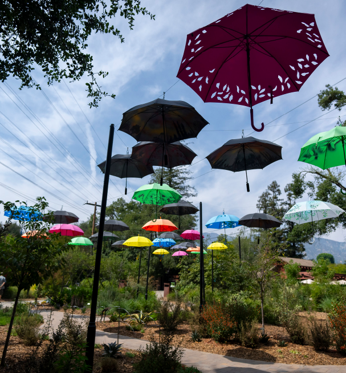
Shade installations illustrate the kinds of outdoor cooling strategies supported by Los Angeles County’s first Heat Action Plan.
The County also updated its water conservation and sustainable landscaping policy. New County projects must now use at least 70% native plant species, helping conserve water, support local biodiversity, and create landscapes better suited to Southern California's climate.
And the LA County Youth Climate Commission had an especially active year. Young people participated in community events, organized gatherings during LA Climate Week, and advanced recommendations on climate policy. Through a youth grant program, they also helped bring locally led climate-action projects to communities across the County.
Together, these accomplishments show the range of the OurCounty Plan—from changing how the County designs public spaces to giving young people a stronger voice in decisions about their future.
Can you highlight achievements that demonstrate how sustainability efforts are making a tangible difference in people's lives, particularly in communities facing the greatest environmental challenges?
One example is the County's work to make streets safer. Through its Vision Zero initiative, Public Works has advanced traffic safety improvements in communities including East Los Angeles, Florence-Firestone, Lennox, and Willowbrook/West Rancho Dominguez. These investments focus on areas where residents face significant risks from traffic collisions, with the goal of making streets safer for people walking, biking, and driving.
Another is the expansion of workforce training opportunities. In July 2022, the Department of Economic Opportunity awarded $39.7 million to 27 High Road Training Partnerships, supporting more than 2,500 workers enrolled in training, producing over 1,400 graduates, and facilitating more than 630 hires. Several partnerships focus on careers in solar energy, sustainable construction, water management, and other growing sectors. These programs are designed to help residents access good jobs while building the workforce needed for a cleaner economy.
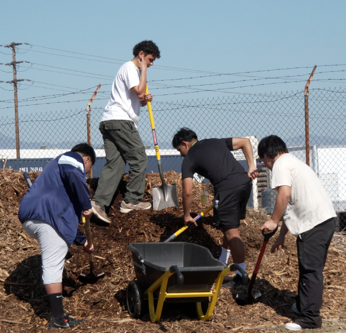
Participants work outdoors in the High Road Training program
These efforts reflect an important principle of OurCounty: sustainability should produce real benefits in people's daily lives, from safer streets and better job opportunities to dependable drinking water.
Despite this progress, where are the biggest gaps between the County's long-term goals and conditions on the ground? What are the main obstacles to closing them?
The County has made meaningful sustainability progress, but the scale of the challenges remains enormous. Extreme heat, wildfire risk, housing affordability, pollution, and the transition to clean energy are all issues that require sustained investment over many years.
One major challenge is moving from planning to implementation. Developing policies and setting goals are important first steps, but delivering results often requires funding, infrastructure, staffing, and coordination among multiple agencies and jurisdictions. Some of these efforts are also beyond the County's direct authority.
Funding is another significant obstacle. Many sustainability investments produce long-term savings and public health benefits, but they require substantial resources upfront. Budget pressures and uncertainty around state and federal funding can make it difficult to move as quickly as we'd like.
The 2026 Annual Report shows that more than 79% of the County's 72 priority actions are on track. That's encouraging, but it also means some actions are progressing more slowly or have yet to begin. The report helps us identify those gaps and focus attention where additional support is needed.
What is one important sustainability priority for the coming year, and what actions or milestones should residents watch for?
One important priority is strengthening the County's ability to prepare for and recover from climate-related disasters, particularly wildfires.
Following the devastating January 2025 wildfires, the County convened the Blue Ribbon Commission on Climate Action and Fire Safe Recovery. The CSO, working with County departments, recently completed a report to the Board of Supervisors reviewing progress on the Commission's recommendations, identifying additional steps the County can take, and highlighting actions that require leadership from other agencies and partners.
This work connects directly to the OurCounty Sustainability Plan, including efforts to strengthen household and neighborhood wildfire preparedness and coordinate funding and partnerships for climate resilience.
Looking ahead, residents can watch for continued implementation of the Commission's recommendations, expanded community preparedness efforts, and additional coordination to support a safer, more resilient region.
Finally, what can residents do to help advance OurCounty's goals and hold the County accountable for progress?
Residents have an important role to play, not just through individual choices but by helping shape the policies and investments that affect their communities.
Each year, the Chief Sustainability Office works with County departments, community partners, and other stakeholders to report on implementation of the OurCounty Sustainability Plan. The annual reporting process includes a public comment period, giving residents an opportunity to review progress, raise concerns, and help inform future priorities.
We also encourage residents to participate in community meetings, public forums, and local sustainability initiatives. Community voices are especially important in identifying needs and solutions that might otherwise be overlooked.
The OurCounty Sustainability Plan is a long-term commitment, and meaningful progress depends on continued public participation and accountability.
Visit the OurCounty Sustainability Plan website to explore the plan, review annual reports, and learn how to get involved.